Exploring the latest trends in pottery and containers
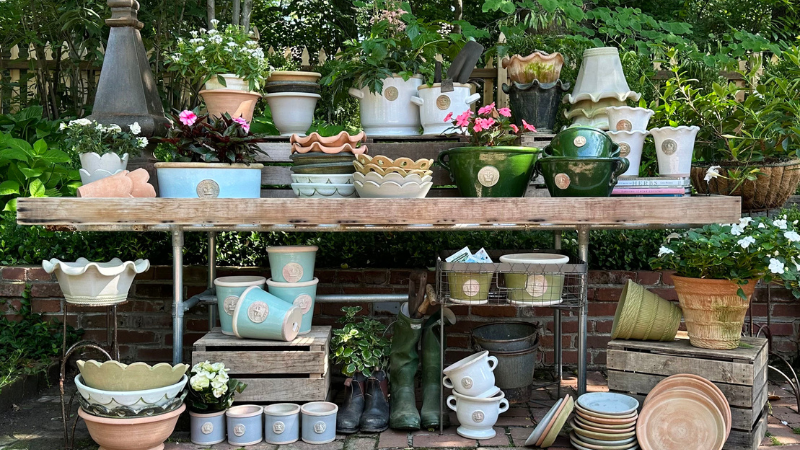
Top photo courtesy of Botanical Collections.
From innovative designs to eco-friendly offerings, customers are looking for pottery and containers that make a statement. Here, three suppliers share their bestsellers and tips for how garden retailers can sell more containers.
Lawn & Garden Retailer: What trends are you seeing in pots and planters? How has that changed over the past few years?
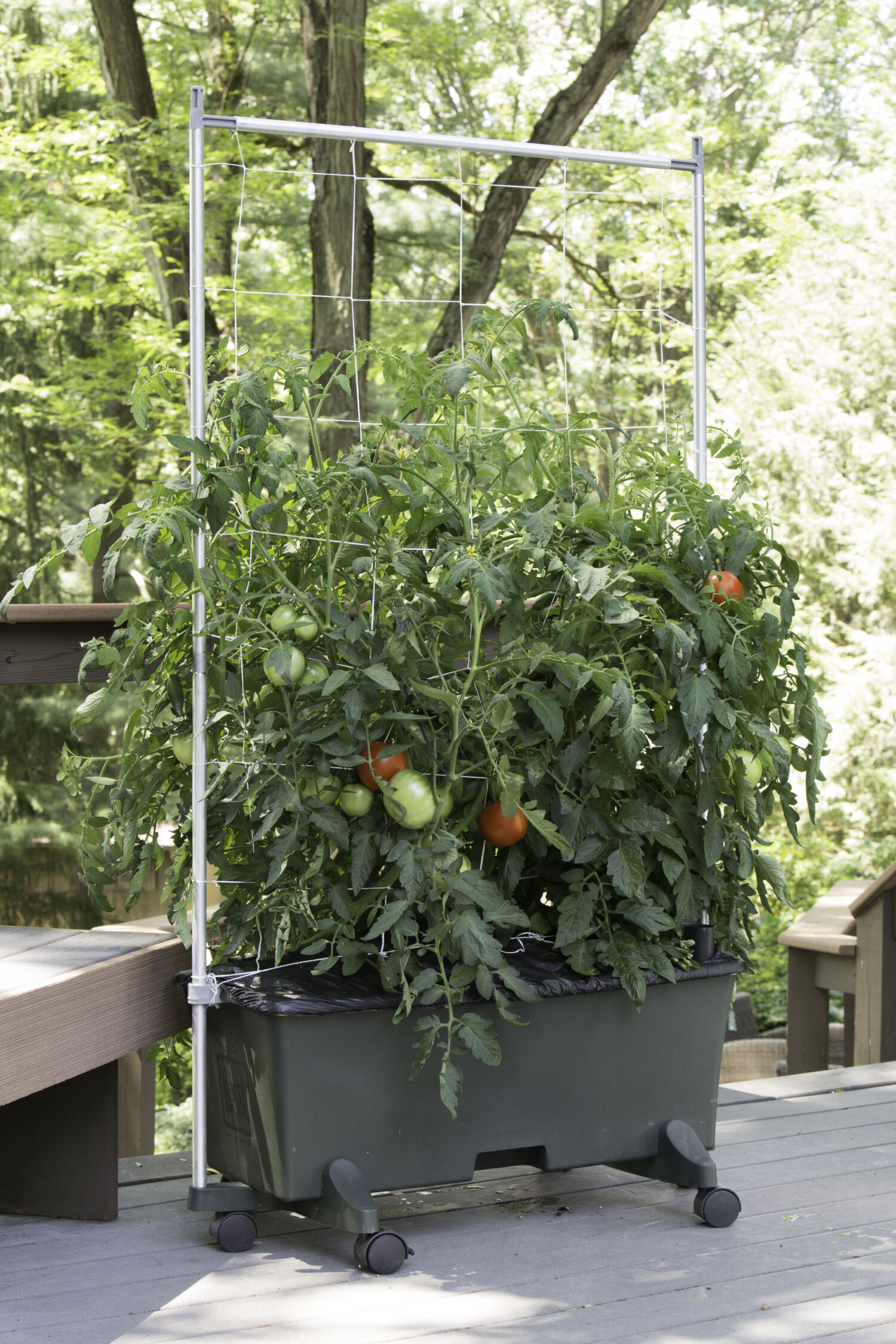
Beth Bowers, Novelty Manufacturing: Indoor growing, succulents and grow-your-own trends have dominated the past few years in plants and herbs, and containers have met the need for these popular trend requests. Eco-friendly, biodegradable and made-in-the-U.S. offerings seem to tip the scale in sales. Sturdy, lightweight resin planters have gained more popularity with upscale design patterns, muted colors and water-minder features, or an attached tray. Eight-, 10- and 12-inch planters, along with tall profiles for entryways, patios and decks are bestsellers. Planters with funny faces, open heads or open-topped animals are increasingly popular. Kitschy sayings draw consumers’ attention. Pots with casters are enticing due to the ability to move a heavy pot from sun to shade or room to room with ease.
Themes including mushrooms, ethereal, gnomes, homesteading, canning, chickens, two-toned planters and neutral tones like velvety greens and sultry rust dominated color schemes at Atlanta Market this past January.
Kelly Goggin, Botanical Collections: Our core values/marketing/brand story has never been about clientele keeping up with trends. What we notice is that our clientele values handmade, artisan-quality, timeless pieces with a good story that are also not made in China.
People are always asking us to produce more classic and sophisticated shapes, expanding on our styles and colorways. [We’re seeing] way more demand for new styles using our unique vision.
L&GR: What is your bestseller? Why do you think it’s performing so well?
Bowers: Novelty’s ArtStone line sells well due to the fact that the material is a combination of resin and crushed limestone, giving each piece a unique mottled/marbled look. The pieces are lightweight, can withstand the elements and have a water-minder feature that eliminates the need for a saucer or tray. Artstone planters fill a space between a ceramic and regular resin pot. In addition, 10-inch cylinder pots hold special attraction for indoor growing; they stand alone with a mid-century clean look but bode well in macramé hangers, too! Tabletop bowl planters are a unique offering and work well for gifting and herbs.
Shane Erwin, Savannah Umbrella Accents: Our No. 1 seller is the 15-by-5.5-inch high round Savannah Planter. It’s specifically made to accommodate a standard 5-inch plant. Brown is definitely the No. 1 color so far, followed by white and then gray. We’ve just added two new colors: a black planter and a round granite. It’s a special color that you add to it that makes it looks just like granite stone but it’s actually plastic. My sales team let me know that black would be a good option because a lot of the patio tables this year that are coming out are black.
We also started having our planters pre-drilled when we make them and we insert removable little custom rubber drain plugs — it’s something different than regular planters.
L&GR: Do you provide fixtures/displays for your pottery products? How do garden centers use them?
Bowers: Novelty had provided corrugated displays until we discovered most retailers do not use the display unit, preferring shelf space. We reexamined our merchandising and designed a better labeling option, adding a QR code and cutaway images and invested in adhesive that was moisture proof. We then moved the label to the inside of the planter so any strong UV rays or glue residue did not mar the outside of the planter.
Erwin: I currently have a floor display for 20 planters, and we’re looking at developing one now that has six. We prepack the planters in six packs; it’s a better deal for us to drop ship directly to the stores than it would be to continually move pallets in and out of stores. We worked out a deal where we sell cases with two three packs. You can do it all brown, gray or white, or you could do a combo of two of each, and we drop ship those direct. We offer prepaid shipping as well, just to get them in garden retailers’ hands.

Goggin: We are so excited to release our English garden display stand at the January 2026 Atlanta Market.
L&GR: What can IGCs do to sell more pots and planters in their stores to differentiate from the big-box stores?
Bowers: Most garden centers have stepped up their offerings to compete with big-box outlets. Knowledge drives sales, and garden centers use such resources in educating sales staff via product knowledge sessions to set themselves apart. Dealers often reach out for images, links, POP and swag/merch to bring brand recognition to the product line. Planting eye-catching pots makes a sale easy — pretty and so attractive, it’s hard to pass up. Popup classes like Couples’ Terrarium Planting for Valentine’s Day or Daddy/Daughter Planting for Mother’s Day gifting are sure winners. IGCs have been known to offer Goat Yoga, Cooking with Herbs, and heirloom tomato workshops. From forever learners to forever friends, fun and educational sessions are a compelling reason to visit.
Walk the aisles of other stores — big-box, mid-box, markets, baby stores. Watch and listen to what the consumer is attracted to. Walk trade shows — some booths are more popular than others, and even if a product does not suit, an idea may germinate. Always study trends and decipher what works best in your store.
Loyalty, word of mouth, knowledge and family history are the sales drivers of IGS. Don’t be afraid to tell your story, no matter if you have been in business for two years or 200. The “story behind the story” is what is intriguing to customers. A certain connection goes a long way with historical pieces and images or mixing vintage with modern items. Professional consultants and staff brainstorming can elicit simple, trendy vignettes.
Most IGCs have mastered trendy subjects like how-tos and coffee talks. Revisiting these themes may be beneficial. Highlight subjects on Instagram pages. Place suggestion boxes throughout the store. Cross merchandising via color, theme or concept is a great way to sell planters. Display planters as a grouping in three different sizes, displaying the set as a set-it-and-forget-it design.
Ask a manufacturer or rep to custom design a POG with bestsellers and work to create sizes and combos based on trends. Recognize your target market and familiarize yourself with the latest terminology, like Cottagecore and Dopamine Design. Ask for planter donations or discounts from manufacturers on seconds or overruns and excess inventory. Bundles and kitted items are favored sellers, along with offerings for kids. Grandmas can’t refuse!
Sales improve when a pot is professionally planted in the garden center, as not all consumers have a knack for marrying plants to pots via color, sun exposure, size, combo trinity planting, etc. Timing is everything, and with busy lifestyles comes a “do-it-for-me” purchase.
Keep a keen eye on economic fluctuations. Tomato seeds are less expensive than store-bought, and chickens are becoming more popular than ever due to the price of eggs. These swings can be an asset to your bottom line.
Erwin: I think having a display is key — showing people what is available to spark their interest and their design ideas. When we go into any big-box store, they don’t have anything on display; they have all the items, but nothing built to offer any insight on what you can or can’t do, and I think that’s a problem. That’s why we’re pushing all of our displays. Having a small sample or some type of display that’s showing exactly how it works is key. When they see it, they see how beautiful it is and how simple.
I met with a store owner recently where I showed the owner the planter with flowers planted in it, and he was blown away. Not only is it going to help sell the planter, but it’s going to bring attention to the patio set itself.
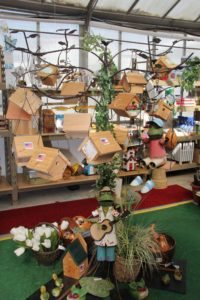
Goggin: Spend some time creating themed vignettes that either tell a story or combine various products that are seamlessly intertwined for cross marketing. Combine the new and vintage together.




 Videos