
Plant care goes high-tech
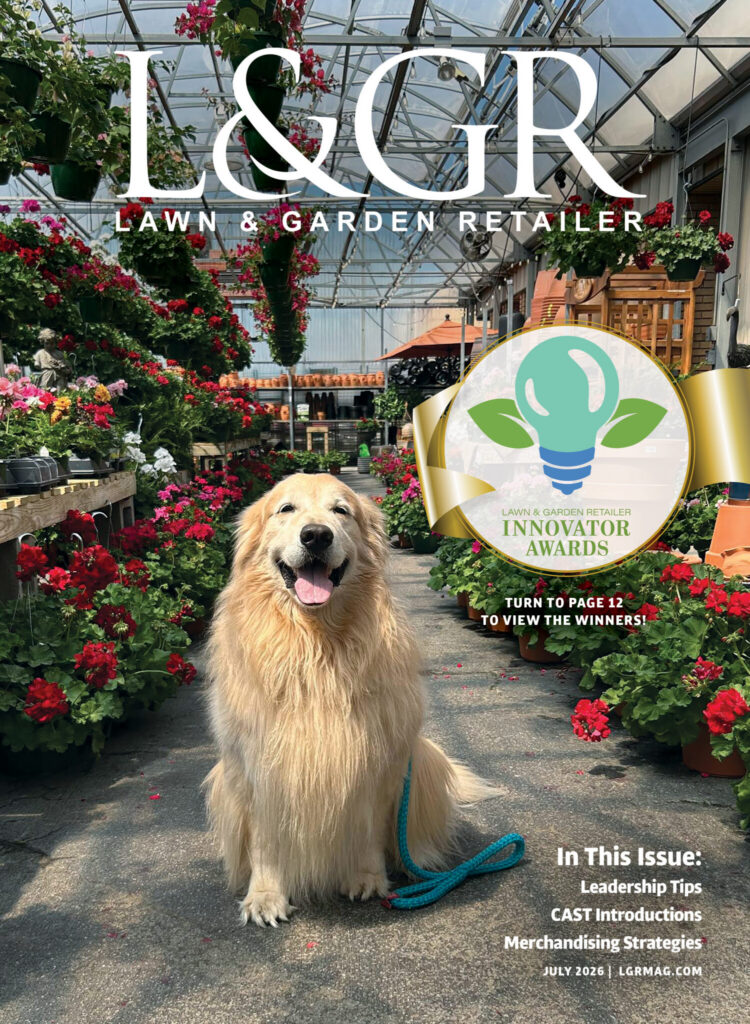
Top photo: Garden centers can create and customize QR-code-enabled bench cards in the PlantTAGG system. Photo courtesy of PlantTAGG.
A gardener’s success rate with plants starts with making wise plant purchase decisions at the garden center, said Andrew Levi, founder and CEO of PlantTAGG. To this end, he and his team set out to develop technology to make choosing and caring for plants easily available not only for customers but for garden retail employees as well.
“We set out to bring data science to help gardeners find higher levels of success,” he said. “Everybody kills plants, and it doesn’t have to be that way — some people are very successful in gardening, and the difference between those that fail and those that succeed is really one fundamental thing: knowledge. We decided that we could build a platform that’s heavily based on data science and AI to help those people who aren’t master gardeners or super experienced with gardening to have the knowledge they need to find higher levels of gardening success.”
He said PlantTAGG uses data and expertise from certified master gardeners, master naturalists, and leading U.S. agriculture academic institutions, as well as the U.S. Department of Agriculture and the National Oceanic and Atmospheric Administration (NOAA), which became the foundation on which they built their technology over the last four years.
Levi explained that PlantTAGG works in three ways: a widget that garden centers can plug into their website to help people research plants, QR-enabled bench cards that provide access to a lightweight mobile web app that provides plant-specific information in store, and a full mobile app that helps educate home gardeners about plants and how to care for them.
At the Garden Center
PlantTAGG connects shoppers to their local garden center via QR-code-enabled bench cards garden centers can create on-site via a drag-and-drop platform in the PlantTAGG system. The code connects to a lightweight version of its app to identify plants that will be successful in their exact location, sun requirements and other criteria.
“Our system has a very comprehensive suggest-a-plant functionality,” he said. A shopper can, for example, specify that they’re looking for a shrub that’s two feet high at maturity, grows in full sun with medium moisture, and attracts bees and butterflies. The system will produce a list of everything that works that’s also location appropriate. In addition, PlantTAGG can also provide a list of suitable companion plants.
PlantTAGG also recommends plant care products shoppers will need for a certain plant, such as fertilizers, pruners and other upsell opportunities, providing a chance for garden centers to increase their ticket size.
“We’ve proven that, on average, our technology will drive at least $10 of additional in-store purchasing from people who use it,” he said. In addition, garden centers see a “pretty high percentage of repeat shoppers” from people who use the app in-store.
Levi said retail staff can benefit from using PlantTAGG to instantly find this information for customers as well.
“We found that store associate use is of real value to garden centers — because they’ve had a challenge hiring people that have plant knowledge — so this gives them the ability to hire somebody who might be new to the industry who doesn’t have a lot of plant knowledge,” Levi said. New or less-experienced garden center staff can use PlantTAGG on their phones to get answers for customers without having to walk away to ask someone else, sometimes losing a customer in the process.
“It makes the store associate really smart and helpful, really quick,” he said.
Garden retailers can also use the app for digital marketing, such as push notifications when a new shipment arrives or invitations to classes or other events, or to send out coupons.
Just released in March, the PlantTAGG mobile app now includes a Tag ID feature. Levi said the first-of-its-kind capability can help garden center shoppers match plants to their local conditions by snapping a photo of a printed plant tag.
“Tag ID helps shoppers make smarter decisions with instant, accurate plant information available in-aisle from the printed tag,” he said. “People don’t realize this, but plants are the No. 2 impulse purchase after candy at the register.”
Shopper Success at Home
Once shoppers leave the store, a text message is sent that invites them down to the full mobile app, which has all of the care technology and search functionality, as well as a plant care task list.
At home, gardeners set up their yard in “zones” on the app, where they add the plants that will be added to that area or are already there.
“They define the zone by naming it and entering its sunlight value, moisture level and, optionally, soil and pH,” he said. Plants can be entered by taking a photo of them, which the app then identifies, and the gardener adds to the desired zone.
“The neat thing is, as you’re adding plants to a zone, the system will tell you whether it thinks the plant’s going to do well or not where you have or intend to plant it. It’s a proprietary part of our system that we call the Thrive Scorecard that grades the potential success or failure of a plant under the planning conditions. It’ll tell you that right up front.”
Levi noted that garden centers with landscaping businesses can also set up their clients’ yards and zones in the app for their landscaping projects. After the project is completed, the yard can be transferred to the homeowner via the app — ”it becomes their yard, and the app will tell them everything that you installed and exactly how to care for everything.”
Levi said the app works all year to render tasks necessary for every plant the gardener has added to their yard. It can provide care instructions for “everything from shade trees to house plants, vegetables, herbs, perennials, annuals and turf grass.”
The tasks sit in a queue and a push notification is sent out at a designated time each week notifying the gardeners that there are tasks that need attention. The gardeners then open the app to see all the things that the system thinks needs to be done for all plants.
The app also has a feature called ‘Ask Emily,’ which is an AI-driven capability to identify 80 different pests and diseases, including under/overwatering, sun damage and more. Homeowners take a photo of a damaged plant, and the app can diagnose the problem. Levi said when they were first building the app’s plant care and problem diagnosis feature, he took a photo of a friend’s lush, green lawn to see what the app would respond with. Surprisingly, he said the app reported “mechanical damage.”
“I looked really closely at the grass, and the blades were all jagged, which — she said specifically — it looks like somebody’s cutting this grass with a dull blade. And sure enough, she was right.”
Tracking Local Plant Trends
While the platform doesn’t track specific plants purchased at garden centers, it does capture what’s being planted using PlantTAGG — valuable information for retailers. The platform uses the data to rank plants from most to least popular, giving the retailers insight into what their customers are planting — and perhaps what they could be selling to them.
It can also be used to track plants that don’t do well in a certain area.
“As people add plants to a zone, if they later remove them from the zone, that means they’ve either moved the plant to a different zone or it died,” Levi said. “We can get trending data across the entire country of individual plant varieties that claim that they do well in, say, Zone 4, but we’re actually seeing it die in Zone 4. We have more real-time insight about where plants live and die than any system that exists in the world.
”Our goal is to help gardeners improve plant care outcomes through data science. And in the process, help garden centers build deeper relationships and improve loyalty with their customers, driving repeat visits and bigger purchases.”



 Videos