Magic at the Root of Fungus Gnat Control
When customers see flying gnats, it’s time to recommend a biological IPM plan that targets the fungus gnat larvae hidden in the soil.
Written by Dr. Daniel Zommick, Technical Development Manager for Magic Gardener™ plant protection products
(Sponsored) Few things annoy a plant parent more than a cloud of tiny black flies swarming up every time a plant is watered. One day, your customers’ houseplants look fine. The next, fungus gnats are hovering around the windows, crawling across the potting mix, or popping out of seed-starting trays on the kitchen counter. That’s when they walk into your garden center looking for a quick fix. The best retail teams can offer something better: a complete, easy-to-understand Integrated Pest Management (IPM) program that solves the problem at the source and builds confidence in the store’s expertise.
That advisory role is where independent garden centers shine.
What are fungus gnats?
Fungus gnats are small, dark, mosquito-like flies often found around houseplants, seedling trays, and other container plants. Adult fungus gnats are usually the first stage people notice. They are weak fliers, so they tend to hover near pots, rest on the surface of the growing media, crawl around lower leaves, or collect near bright windows.
While adult gnats are extremely irritating, they are not the biggest concern for plant health. Fungus gnat larvae live in moist potting mix and feed on the tender plant roots. In established houseplants, a light infestation may not show plant health symptoms. But in seedlings, cuttings, young transplants, or stressed plants, larval feeding can damage root hairs, which slows growth and makes plants look weak or malnourished.
| Fungus Gnat Life Cycle
At about 75°F, fungus gnats can move from egg to adult in roughly two to three weeks, so a small problem can build quickly. Eggs typically hatch in 3 to 6 days. The larvae then feed for 7 to 10 days in the upper layer of the growing media, where tender roots, fungi, and organic matter are present. The pupal stage lasts about 3 to 6 days. Adult fungus gnats may live for 7 to 10 days. Although adults are the stage homeowners notice first, larvae are the key stage to target if you want to break the pest cycle. That is why Magic Gardener® Fungus Gnat Killer belongs at the cornerstone of a complete Fungus Gnat IPM program. |
Cultural Control: Start With Water Management and Media
Fungus gnats are a symptom of a moisture problem. Many houseplants suffer more from “too much love” than neglect, and fungus gnats take advantage of that consistently wet surface. They thrive in damp, organic growing media, especially when the surface stays wet, plant debris accumulates, or pots do not drain well. The first message to customers is simple: water when plants are thirsty, not on a schedule. Water only when the upper layer of media is dry, improve drainage if necessary, and remove debris from pots and saucers that might retain water.
Sometimes, the best answer for a customer with a heavy infestation is a substrate reset. Fungus gnats lay eggs in the top layer of the soil, so a good recommendation is for the customer to remove that portion of the media and replace it with new, well-draining potting soil.
Mechanical Control: Block, Trap, and Monitor
Mechanical tools help customers visualize their IPM needs and add layers of protection against a worsening infestation. For instance, yellow sticky traps help customers see whether adult activity is increasing or declining, and they can also provide mass capture around problem pots. An added bonus to recommending yellow sticky traps is that they are easy to explain, easy to merchandise (especially alongside Magic Gardener Fungus Gnat Killer), and useful even after treatment begins. The key is setting expectations: sticky cards catch adults, but they do not control larvae in the potting mix.
Top-dressing is another useful mechanical tool. A thin layer of clean sand or another suitable surface barrier can help make the media surface less inviting for egg laying and can also help homeowners reduce the constantly wet surface conditions fungus gnats prefer. Top-dressing works best as prevention or support, not as a stand-alone program.
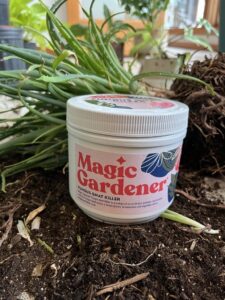
Biological Control: Make Magic Gardener™ the Anchor
Homeowners and plant parents keep plants in and near family living spaces, so a biological-first recommendation feels practical and approachable. When used according to label directions, Magic Gardener Fungus Gnat Killer gives retail customers a people-, planet- and pet-friendly anchor to a fungus gnat IPM program (and it is OMRI-listed for organic use).
Magic Gardener Fungus Gnat Killer targets the larval stage in the growing media, which yellow sticky traps and top-dressing won’t address. It is a trusted solution commonly used in the professional growing industry under the name Gnatrol®. The active ingredient, Bacillus thuringiensis subsp. Israelensis, strain AM65-52, has a fast-acting mode of action that controls larvae within 24 hours of application.
Outbreak Control
Apply the highest labeled rate of Magic Gardener Fungus Killer weekly for at least three weeks, or until infestations are under control.
Maintenance Program
Regular follow-up applications (for example, monthly or with every other watering) with a lower application rate will establish a long-term maintenance program.
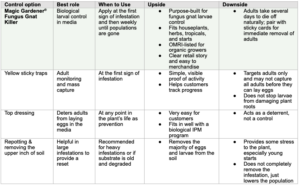
The Magic Gardener Fungus Gnat IPM Program
| Fungus Gnat or Fruit Fly? Try the Potato Slice Test
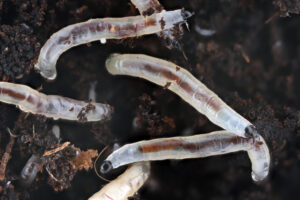
Want a simple test for your customers to see if they have fungus gnats and not fruit flies? Try the potato slice test! Press a thin slice of raw potato, cut side down, lightly into the surface of moist potting mix. After about two days, lift the potato and inspect the underside for small, pale larvae with dark heads. If larvae are present, the customer has fungus gnats, and you can recommend the full fungus gnat IPM program.
|
The Retail Takeaway
Fungus gnats are not just a customer pest problem; they are a retailer service opportunity. Customers want fewer flies, healthier plants, and guidance they can trust. Retailers that teach IPM can deliver all three. By making Magic Gardener Fungus Gnat Killer the foundation of a complete IPM recommendation, retailers can deliver better outcomes for customers while building profitable, solution-based sales.
Magic Gardener is brought to you by Mycorrhizal Applications. For more information about Magic Gardener Fungus Gnat Killer or to find a distributor, visit MagicGardener.com


 Videos