
Perspectives on pots and planters
(Top photo: Brome’s new GardensUP Harvester pole system is a modular vertical gardening system designed to hang multiple planters, baskets and décor elements. Photo courtesy of Brome.)
When it comes to pots, planters and accessories, things are looking up — literally. From pole systems for raised pots to adding pots to pots, container suppliers have their eye on innovations to solve home gardeners’ problems.
I reached out to three pots and planters suppliers to find out how the category is changing and why sustainability is such an important factor.
Solving a Problem
Brome’s new GardensUP Harvester pole system started with raccoons, said Tatsiana Thomson, sales and marketing manager at Brome (formerly Brome Bird Care).
The system is a modular vertical gardening system that allows homeowners to hang multiple planters, baskets and décor elements from a single, stable pole. Thomson said customers asked the company to solve the problem of raccoons raiding bird feeders and literally carrying them away.
As a result, the heavy-duty Raccoon Buster pole system was developed — engineered to be stable, secure and resistant to wildlife and weather — by the Quebec-based company.
“But at Brome, we rarely design products to solve just one problem,” she said. “When we stepped back, we realized this pole system was so strong and modular that it could support much more than bird feeders.”
Soon they began experimenting, hanging flower baskets and berry plants from the pole to attract pollinators and also provide natural food for birds, she said. That evolved into a few summers of growing herbs and vegetables vertically, knowing that the structure could handle the weight.
“After seeing how beautifully it worked as a vertical growing system, we developed and refined the concept into what is now the GardensUP Harvester.”
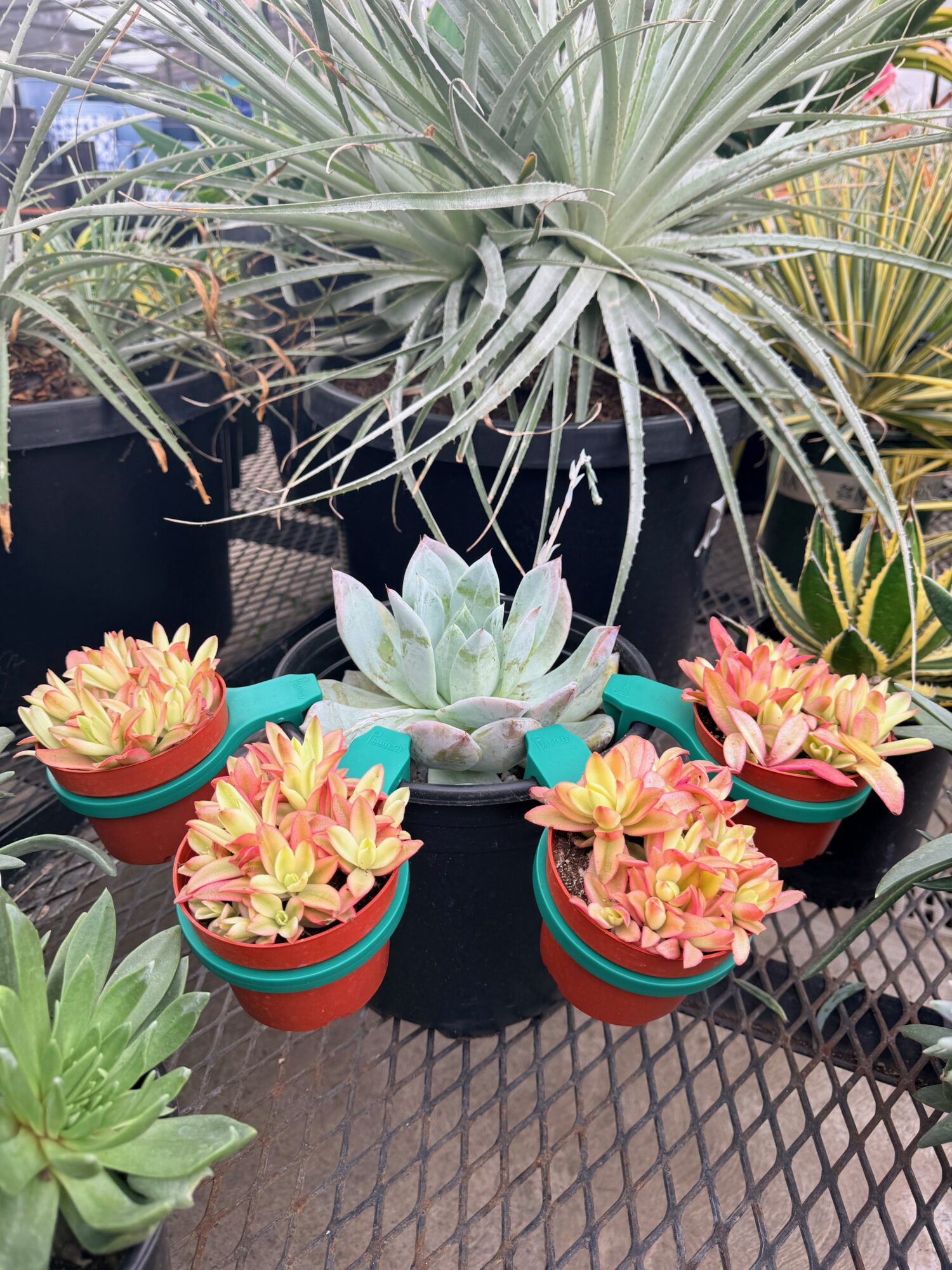
Planterly is an insert designed to hold 4-inch plants and place them into existing 6-inch and larger “mother” pots. Launched in January, the idea came about “after hearing my wife [co-founder Lulu] comment — again — that she was running out of space. A real problem for almost every plant enthusiast,” said founder Adam Curtis.
“I was sitting on the couch looking at her plant wall — over 270 plants on shelves — and the angle I was viewing it from made it look like one pot was floating next to another, filling what is normally dead space between plants,” he said.
Upon further inspection, he saw that Lulu had placed a metal stick extender under the shelf to support an extra pot. Adam grabbed a few popsicle sticks, cut a plastic ring from a cup and glued together a rough prototype.
“I asked my wife to come take a look at something, inserted it into one of her pots and placed a secondary plant into the holder. Her eyes lit up. She smiled and, in that moment, I knew we were onto something.”
Design Trends Leading the Way
Anamese Garden + Home has been supplying design-forward pottery and planters to the market for more than 25 years, traveling regularly to Paris and Milan to guide their design direction.
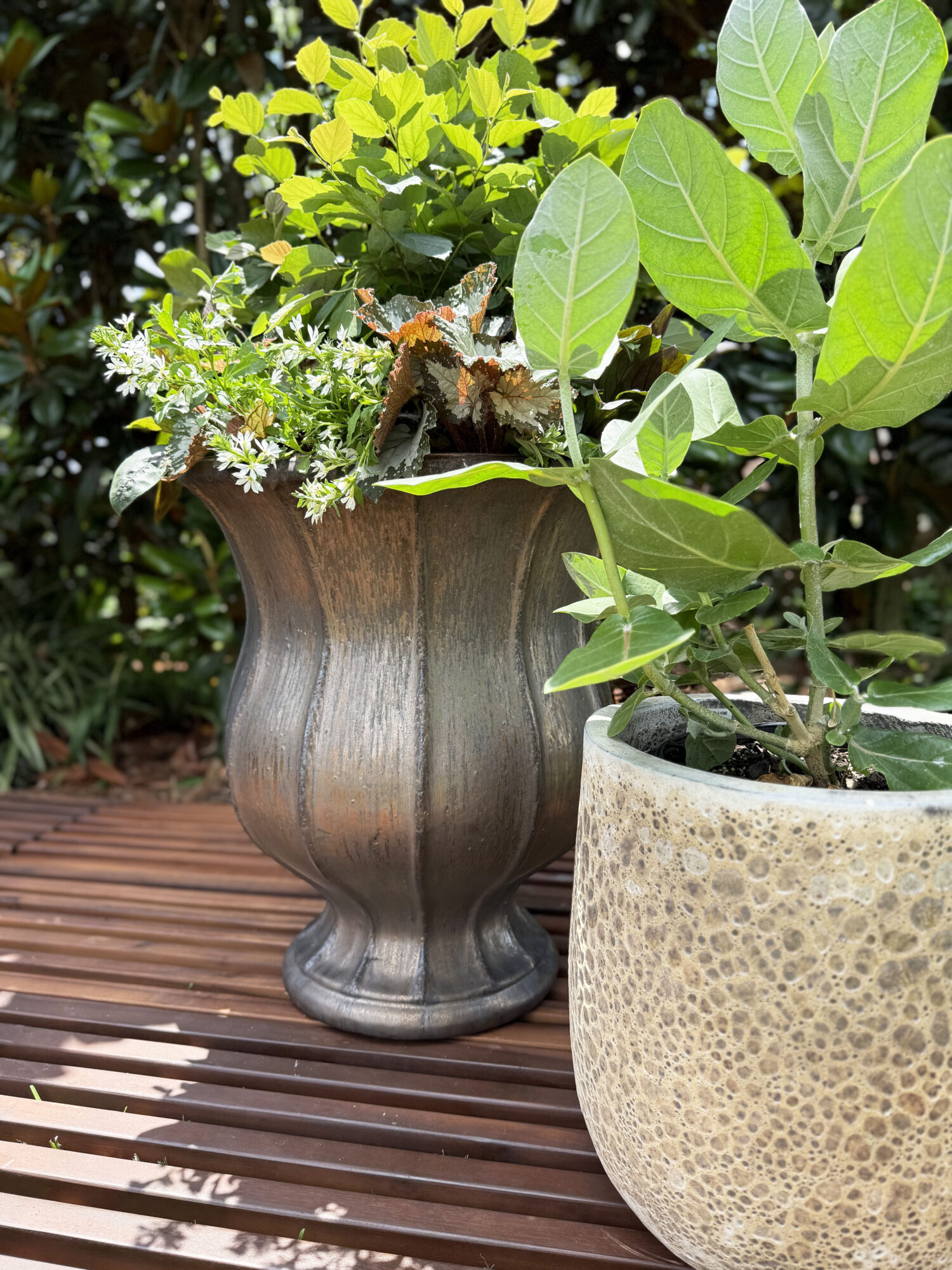
“In Milan last year, we saw more color re-emerging, but always anchored in nature,” marketing director Ashley Goldman said. “Color felt alive and expressive, yet still grounded and refined,” with design trends leaning toward calm, earthy tones.
“We’re seeing a strong pull toward pieces that feel grounded and enduring — soft, rounded forms with textured finishes that are easy to layer and effortless to style,” she said.
“We saw the writing on the wall at Maison Objet in Paris in 2019, where grounded, textured, earthy neutrals were absolutely everywhere. That wave hit the U.S. market in 2021 and it hasn’t let up.”
Terra cotta is gaining momentum as well, she said. “Our Vietnamese terra cotta has been a bestseller for years, and now we’re seeing a surge of interest in Italian terra cotta as well. Italian terra cotta brings that old-world, European charm while offering the same durability as our glazed planters — it’s a natural next step for buyers who love the aesthetic.”
Multi-Purpose Pots
Both indoors and out, gardeners are looking to do more with less. They seek out products that not only solve a problem, but can efficiently multi-task as well.
Planterly’s Curtis predicted that the pots and planters category will move beyond purely decorative containers over the next three to five years “toward more functional, flexible systems that reflect how people actually live with plants.
“As indoor gardening continues to grow, especially in smaller homes, plant owners will look for ways to maximize space, reuse what they already own, and adapt their setups over time rather than constantly replacing pots.”
Thomson at Brome agreed. “We see continued growth in multi-functional and space-efficient solutions. Consumers increasingly want products that serve more than one purpose — for example, structures that combine gardening, wildlife support and aesthetic design.”
With increasing interest in edible gardening, pollinator-friendly spaces and small-footprint solutions for urban and suburban environments, she said modular systems that can evolve with a homeowner’s needs — rather than static, single-use items — will likely gain momentum.
A Sustainable Approach
Sustainability is an intentional part of the design process for all three suppliers, relying on long-lasting materials made for use for many years.
“From the start, our goal was to create a product that extends the life and usefulness of existing planters, rather than encouraging replacement,” Curtis said. “From a manufacturing standpoint, we chose a durable, long-life material designed to withstand repeated use over many seasons. Planterly is not disposable, single-use décor, it’s meant to be reused, reconfigured and kept in circulation for years. That durability is a core part of our sustainability approach.”
He said the company also minimizes excess material and waste in the manufacturing process by way of thoughtful design and tooling, and incorporates simple packaging to avoid excess waste.
“For us, sustainability isn’t about buzzwords, it’s about making fewer, better products that last, support creative reuse, and fit naturally into how plant people already care for their plants.”
Thomson said sustainability is foundational for Brome.
“We focus on long-lasting materials and repairability rather than disposable products. Our Lifetime Care program encourages customers to maintain and service their products instead of replacing them.”
Anamese Garden + Home’s pottery is formed with natural clay, “quite literally of the earth,” Goldman said. “And when they eventually break down, they can return to the earth. There’s something honest and grounding about working with a material that completes a full, natural cycle.”
 Videos