
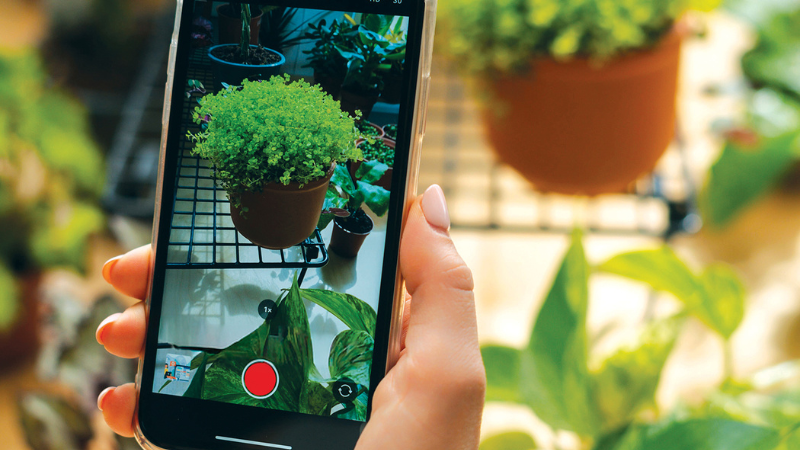
Becoming a digital garden center
A customer walks into a garden center and asks for help finding plants for a shady patio. The staff member walks them through a few options, explains how to care for them and helps them choose plants that will thrive. The customer leaves feeling confident and excited about their garden.
Experiences like this are what independent garden centers do best. But today, many customers begin that same journey long before they ever walk into the store — they start by searching online. They look for inspiration, read plant advice, browse photos and compare local retailers. By the time they decide where to shop, the decision has often already been influenced by what they found online.
This shift is quietly changing the landscape of garden retail.
According to the 2026 Axiom Gardening Outlook Study, more than 50% of consumers plan to spend the same or more time gardening this year, demonstrating that interest in gardening remains strong.
The National Gardening Survey also reports that more than 80 million households participate in gardening, making it one of the largest consumer hobbies in North America.
Yet despite this strong demand, a large portion of plant purchases still occur at big-box retailers rather than independent garden centers.
The reason for this isn’t always price; convenience, clarity and digital accessibility often play a much larger role. When consumers begin their online search, it includes looking for nearby retailers. If a garden center is difficult to find online or its website is confusing, the decision about where to shop may already be made before the customer ever visits a store.
For independent garden centers, this creates both a challenge and a significant opportunity.
The Digital Gap
Many garden centers deliver exceptional in-store experiences but struggle to translate that same experience online. When customers begin their journey, they often search for:
- Plants that fit their lifestyle
- Garden inspiration
- Care instructions
- Availability at local retailers
If the garden retailer’s website is outdated, cluttered or difficult to navigate, the user experience breaks down before the visit can ever happen.
In working with independent garden centers across North America, I’ve seen this situation appear frequently. One retailer had a beautiful in-store experience but a website that had not been meaningfully updated in years. The site was difficult to navigate and did little to help customers plan their visit.
After rebuilding the website and integrating it with the garden center’s P.O.S. system, customers could easily research plants that fit their lifestyle and garden goals before arriving.
Customer surveys later revealed that many shoppers came to this store knowing what they wanted to purchase. The website had become a planning tool rather than simply an information page.
That same garden center later reported its most profitable online season, attributing much of that success to improvements in its digital experience.
The Garden Center Growth Engine
Retailers seeing the most success today are not relying on a single tactic — they are building systems that support the entire customer journey. This system can be thought of as the Garden Center Growth Engine.
Discovery
Customers first encounter the garden center through search engines, social media or online content. Educational content, plant guides and inspiring visuals help the retailer appear when customers are searching for answers.
The Digital Front Door
Once discovered, the website becomes the first real interaction with the business. A strong website clearly communicates how the garden center helps customers succeed with plants and invites them to take the next step.
Convenience
Customers increasingly want to research and plan purchases before visiting. E-commerce, plant availability tools and online ordering allow customers to explore products and reserve items for pickup.
Relationship
Email and SMS communication such as text clubs allow retailers to stay connected with customers throughout the year. Seasonal reminders, gardening tips and event announcements help maintain the relationship long after the initial visit.
Experience
Independent garden retailers still hold their greatest advantage: knowledgeable staff, inspiring displays and a sense of community. When these elements work together, the website becomes more than an information page — it becomes the gateway to the in-store experience.
Why E-Commerce Has Been Difficult for Garden Centers
E-commerce has historically been challenging for garden centers. While traditional online retail platforms assume stable inventory and products that ship easily, garden centers operate in a very different environment. Inventory changes constantly. Plants are seasonal. Some items can ship, while others cannot.
Because of these realities, many retailers have been hesitant to pursue online sales. However, when e-commerce is designed around the unique needs of garden retail, it can significantly enhance customers’ experience.
One effective approach prioritizes three levels of product availability. First, customers see inventory currently available at the garden center. Second, the website can include vendor inventory, allowing certain products to ship directly from trusted nursery partners while still appearing as a purchase from the garden center. Third, customers can reserve products online for in-store pickup, allowing them to plan their visit.
This model expands product selection while keeping the local garden center at the center of the transaction.
Content as Discovery
Another opportunity lies in search-driven educational content. Customers frequently search online for answers to questions such as: “best plants for shade,” “plants for small gardens” and “how to grow tomatoes.”
Garden centers that provide helpful answers to these questions online become part of the discovery process.
One retailer began publishing weekly blog articles addressing common questions customers asked in-store. Over time, those articles improved the garden center’s search visibility and began attracting new customers who had never visited before.
Instead of competing solely through advertising, the business was appearing organically when people searched for gardening advice.
Reaching Customers Who Don’t Know You Exist
Many independent garden centers rely heavily on word of mouth. While that has historically been a strength, it also creates a limitation — younger customers are often not aware of these businesses.
In some cases, retailers operate without a website entirely. Without a digital presence, these businesses are effectively invisible to a large segment of potential customers.
When contemporary websites are launched that showcase the beauty and personality of a garden center, they’re often found by younger audiences through search engines and social media.
Bridging the Digital Gap
Many garden centers recognize the need to improve their digital presence but struggle with where to begin or how to manage it all. They often find themselves negotiating between websites, email marketing, social media, e-commerce platforms and customer data across multiple disconnected systems.
This fragmentation makes it difficult to create the seamless experience that customers increasingly expect. To solve these challenges, industry-specific platforms such as BloomSuite have emerged to help connect these pieces. Designed for the realities of garden center retailers, BloomSuite brings together websites, marketing automation, e-commerce and customer communication into a single system that supports the entire customer journey. When those systems work together, the website becomes more than a place to find store hours — it becomes the digital front door to the garden center experience.
Extending the Garden Center Experience Online
Independent garden centers still offer something the internet cannot replicate: Human expertise. Community. Inspiration.
But for many customers, that experience now begins online. Retailers that thrive in the coming decade will not abandon their in-store strengths, but rather will extend those strengths into the digital experience.
Their websites will welcome customers before they arrive.
Their content will inspire gardeners as they learn.
Their communication will continue long after the purchase.
Because the future of garden retail will not be decided only on the sales floor; it will also be shaped at the digital front door that invites customers inside.





 Videos